ALLEX Teacher Training Institute
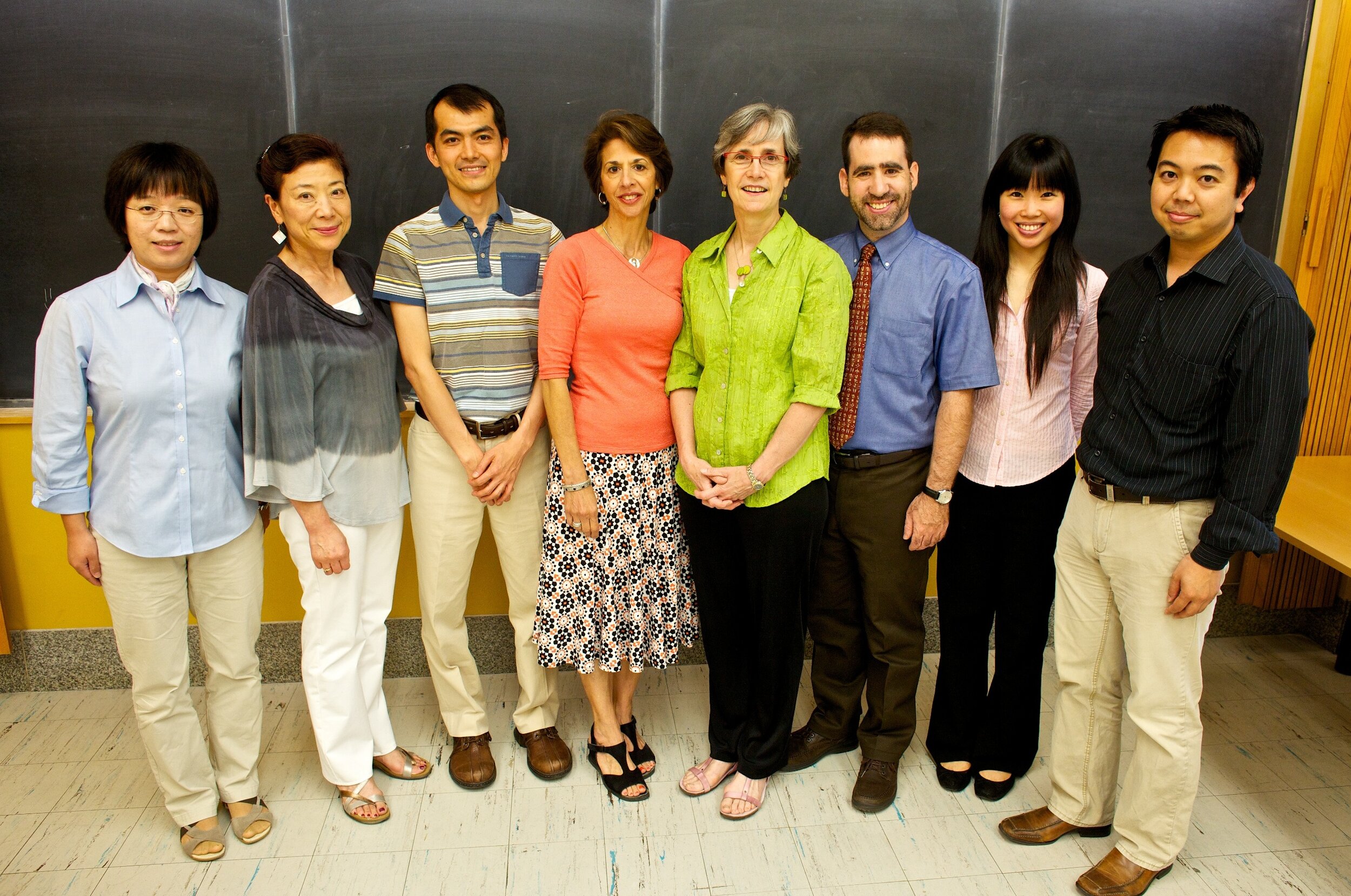
A World Renowned Professorial Team
The ALLEX Chinese, Japanese, and Korean Teacher Training Institute is an intensive course for current teachers of Chinese, Japanese, and Korean, or those who plan to enter the field.
A Foundational Course in Asian Language Pedagogy
The program provides the foundation for a future instructor to teach Chinese, Japanese, and Korean and gives substantial tools to current teachers to reinforce and strengthen their programs. Effective methodology in teaching Chinese, Japanese, and Korean to North Americans is emphasized over a theoretical analysis of the languages. Participants include practicing teachers of Chinese, Japanese, and Korean, those who wish to enter the field, and graduate students from China, Japan, Korea, Taiwan, and the United States

The ALLEX program is the longest running teacher training program in the field. Since 1988 the program has been held each summer.
The Curriculum
The curriculum of the intensive summer program includes a lecture component (covering such topics as the basic principles of effective Asian language pedagogy, classroom teaching techniques, the linguistic analysis of Chinese, Japanese, and Korean, and language testing); an observation component (during which participants observe and analyze actual language classes taught by master instructors); and a demonstration component (during which participants teach actual class sessions, which are videotaped and later critiqued by program faculty members).
Our Focus

Pedagogical Theory
We instill in our instructors an understanding of developments in language teaching (particularly Chinese, Japanese, and Korean language teaching,) that view language as meaning-making activity that involves reflective performance.

Practical Experience
Trainees have ample opportunities in practice teaching with abundant constructive feedback.

Classroom Management
ALLEX trainees are prepared to assume responsibility for a beginning or intermediate language program at an American institution.
Example Topics We Cover
The Language
Nature of language
Learned and acquired culture
Language in culture vs. Language and Culture
Analysis of Chinese, Japanese, and Korean for Western students
Pedagogical grammar
Native orthography vs. pedagogical writing systems
The Classroom
ACT/FACT Dichotomy
Teaching of the four skills
Maintaining appropriate standards
Preparing a lesson plan
Determining appropriate pace
Use of visual aids
Use of audio- and videotapes and multimedia adaptations
Correction
Daily evaluation of class performance
Achievement vs. proficiency vs. prochievement testing
The Students
Handling students who are having problems
Total class involvement
Confidence building
Classroom etiquette

ALLEX faculty have mentored over 1,200 program participants over the last 30 years.
DETAILS
Format
A 6-week hybrid program running from early June through early August. The program begins with four weeks of online sessions (synchronous and asynchronous), followed by a two-week intensive in-person session with six hours of class per day, five days a week. Both phases require substantial preparation and review outside of class hours. Upon completion, participants head directly to their host institutions to begin their teaching assignments.
Schedule
Online: Synchronous (live) sessions held on Friday and Saturday evenings in June. Three hours per evening in small groups. Students must complete Ten hours of asynchronous coursework — including pre-recorded lectures and teaching demonstrations — prior to each live session.
In-Person: Mid-July to early August. The in-person session is full-time with six hours of class per day, five days a week.
Tuition & Location
Tuition: 2027 — To Be Determined (historically $5,000–$6,500. Final cost based on program expenses)
Housing & Meals: Varies by location; self-funded by participant
Location: 2027 — To Be Determined
Past Locations: International House of Japan (Tokyo, 2026); Cornell University; Portland State University; Washington University in St. Louis; Ohio State University; Bryn Mawr College

Language teaching is a skill that requires mentorship, practice, and exploration.
Meet the Directors
-
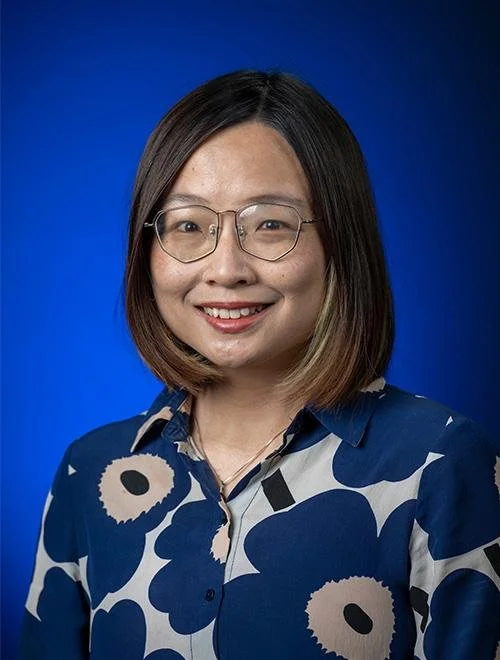
Zhini Zheng
ALLEX Academic Director & ALLEX Professor of Chinese and Japanese Pedagogy;
Associate Professor of Chinese,
University of Mississippi -
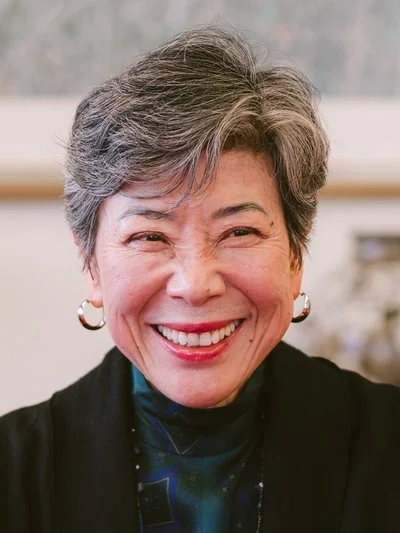
Mari Noda
ALLEX Academic Director Emerita & ALLEX Professor of Pedagogy; Emerita Professor of Japanese
The Ohio State University -

Kumiko Takizawa
ALLEX Director of Japanese & ALLEX Professor Japanese Pedagogy;
Visiting Assistant Professor,
Williams College -

Yongsuk Song
ALLEX Director of Korean & ALLEX Professor Japanese & Korean Pedagogy;
Assistant Professor of Japanese,
University of Tokyo
ALLEX thanks the many professors and lecturers who have been part of our team, including:
Japanese: Asahi Matsumoto, Harvard University; David Patt, ALLEX; Eleanor Jorden, Cornell University; Emiko Konomi, Portland State University; Eriko Akamatsu, Cornell University; Ginger Marcus, Washington University in St. Louis; Hiroaki Kawamura, University of Findlay; Kaho Sakaue, Japan Center for Michigan Universities; Kanako Yao, Wakefield University; Kumiko Takizawa, Williams College; Lindsay Yotsukura, University of Maryland; Mari Noda, The Ohio State University; Masayuki Itomitsu, Linfield College; Masumi Sadler, University of Illinois; Misa Suzuki, Cornell University; Nagisa Shimizu, University of North Texas; Naomi Nakada, Cornell University; Nozomi Imai, Vanderbilt University; Patricia Wetzel, Portland State University; Robert Sukle, Cornell University; Sahoko Ichikawa, Cornell University; Sanae Eda, Middlebury College; Shinsuke Tsuchiya, Brigham and Young University; Stephen Luft, Brigham and Young University; Suwako Watanabe, Portland State University; Tomoko Hongo, Tokyo University of Agriculture and Technology; Yongsuk Song, University of Tokyo; Yuko Kawai, The Ohio State University
Chinese: Cornelius Kubler, Williams College; Donglin Cai, University of Maryland Baltimore; Haohsiang Lao, Massachusetts Institute of Technology; Jianfen Wang, Berea College; Li Cong, Duke Kunshan University; Rachel Wayne, The Ohio State University; Yongfang Zhang, Wofford College; Zhang Xin, Duke Kunshan University; Zhini Zeng, University of Mississippi